|
PhD Student at Max Planck Institute for Informatics Email / CV / Google Scholar / Twitter / Github |
|
|
|
|






|
|
|
I study how multimodal language models reason across images and views, and how to make them more reliable and efficient. My earlier work focused on semantic segmentation with limited supervision. |
|
|
|
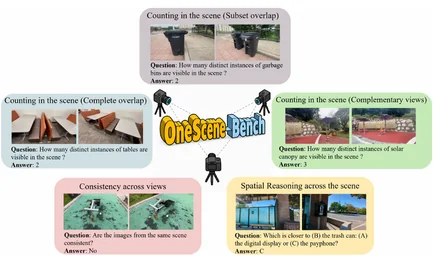
Swathi Suhas, Anurag Das, Bernt Schiele, Jonas Fischer LM4RWD Workshop, NeurIPS, 2026 OneScene-Bench tests whether vision-language models combine evidence across views of the same scene. Across counting, consistency, and spatial reasoning tasks, twelve models struggle when cross-view correspondence is required. |
|
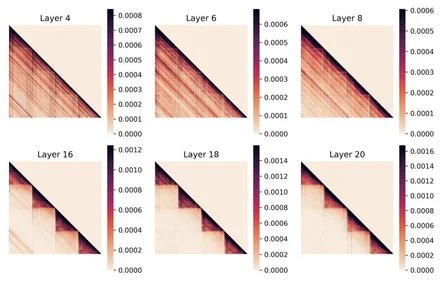
Anurag Das, Adrian Bulat, Alberto Baldrati, Ioannis Metaxas, Bernt Schiele, Georgios Tzimiropoulos, Brais Martinez ACL Findings, 2026 MIMIC exposes multi-image reasoning failures in large vision-language models. Data generation and attention masking improve cross-image reasoning and achieve state-of-the-art results on multi-image benchmarks. |
|
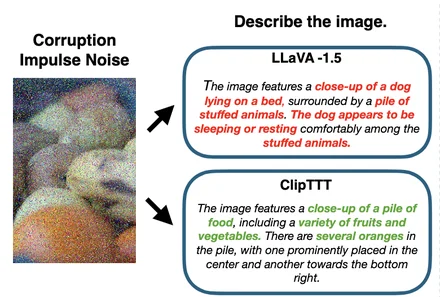
Mriganka Nath*, Anurag Das*, Jiahao Xie, Bernt Schiele arXiv, 2026 ClipTTT uses CLIP-guided test-time adaptation on a single image to reduce hallucinations across 15 common corruptions, without changing the base model. |
|
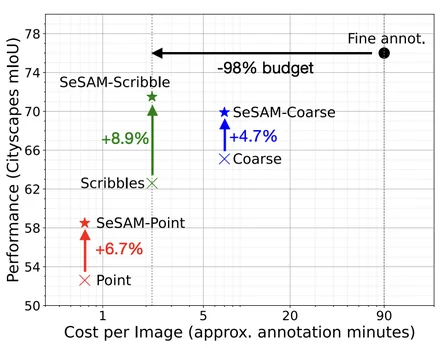
Anurag Das, Anna Kukleva, Xinting Hu, Yuki Asano, Bernt Schiele Transactions of Machine Learning Research, 2026 SeSAM adapts SAM to weakly supervised segmentation with instance decomposition and iterative pseudo-label refinement. Paired with semi-supervised learning, it improves segmentation while reducing the need for dense annotations. |
|
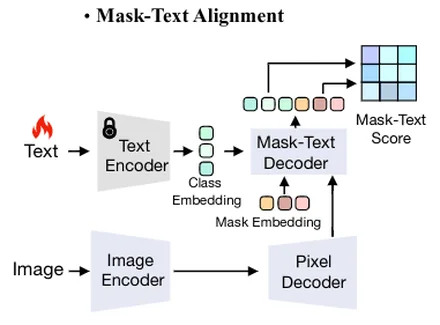
Anurag Das, Xinting Hu, Li Jiang, Bernt Schiele ECCV, 2024 MTA-CLIP aligns masks with text to improve semantic segmentation, outperforming pixel–text alignment. |
|
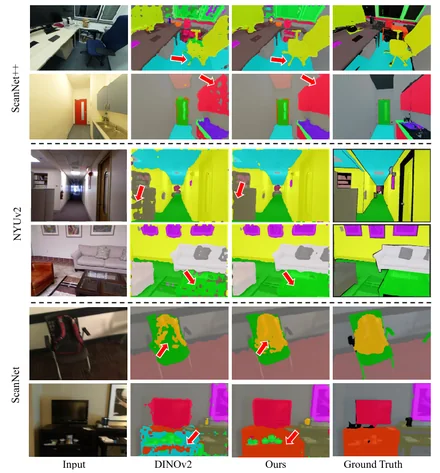
Yuanwen Yue, Anurag Das, Francis Engelmann, Siyu Tang, Jan Eric Lenssen ECCV, 2024 3D-aware fine-tuning improves 2D model features for semantic segmentation and depth estimation. |
|
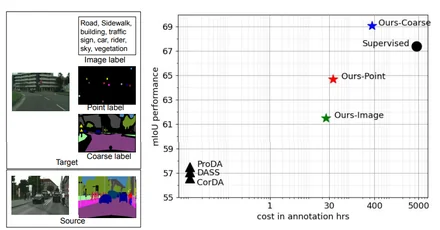
Anurag Das, Yongqin Xian, Dengxin Dai, Bernt Schiele CVPR, 2023 A unified framework uses image-level, point, and coarse target-domain labels to narrow the gap between unsupervised domain adaptation and supervised segmentation. |
|
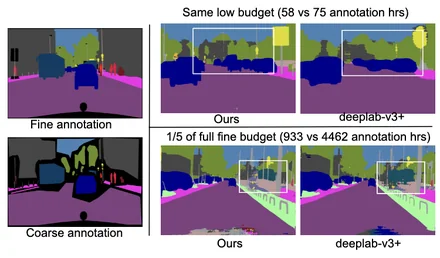
Anurag Das, Yongqin Xian, Yang He, Zeynep Akata, Bernt Schiele WACV, 2023 Coarse annotations and synthetic data deliver competitive urban-scene segmentation at a fraction of the annotation budget required for fine labels. |
|
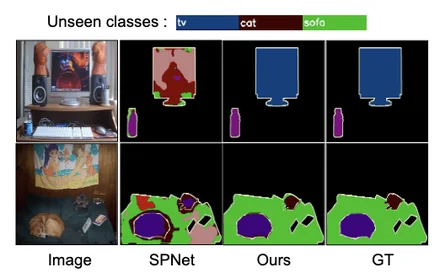
Anurag Das, Yongqin Xian, Yang He, Zeynep Akata, Bernt Schiele GCPR, 2021 [ Best Master Thesis Award in Germany] Superpixel pooling supplies class-agnostic segmentation cues, improving generalization to unseen classes in zero-label semantic segmentation. |
|
|
| Master Thesis |
Saarland University, 2021 |
|
|
|
|
|
|